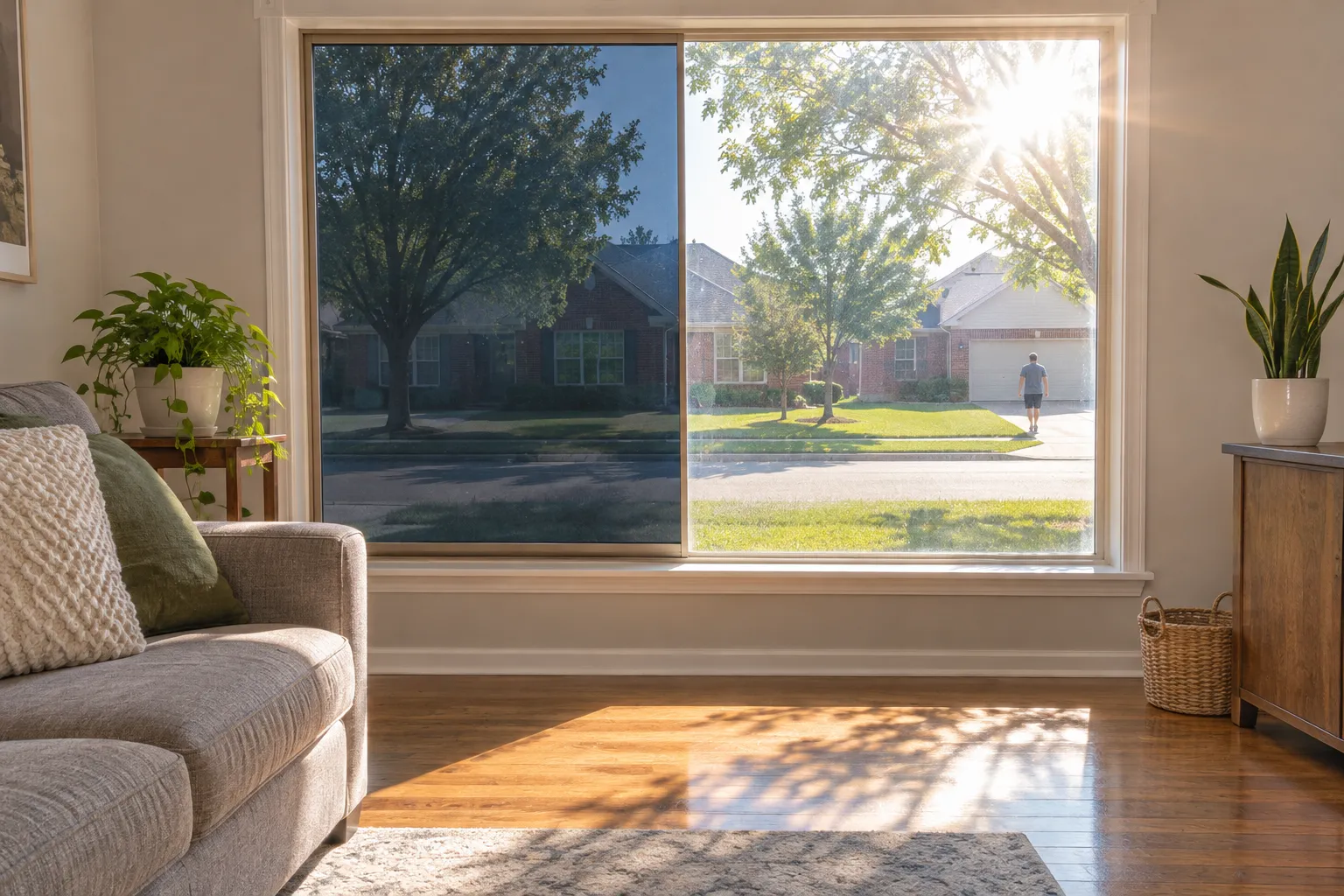
The cheapest effective ways to block heat through windows are interior blinds or curtains you may already have, then exterior solar screens at roughly $100 to $250 per typical window, and solar control window film at about $8 to $14 per square foot installed, according to cost guides checked in November 2026. Each works differently: screens and film stop heat at or before the glass, blinds after it is already inside. This page compares the options so you can pick the right one for each window, and links to heat control window film for the film details. Film prices for your glass come in a written quote after a visit.
What are the cheapest ways to block heat from windows?
The cheapest options are the ones you can do yourself: closing heavy curtains or blinds in the afternoon, adding light-colored or reflective blinds, and planting shade over time. Next cheapest per window are solar screens and standard solar film. Ceramic film and new windows cost the most, but keep the view and need no daily effort.
| Option | Guide cost | How it blocks heat | Keeps the view |
|---|---|---|---|
| Closing curtains or blinds | Low, often DIY | After heat enters the glass | No, when closed |
| Exterior solar screens | about $100 to $250 per typical window | Before heat reaches the glass | Dimmer, screened view |
| Standard solar control film | about $8 to $14 per sq ft installed | At the glass | Yes, slightly tinted |
| Reflective film | about $6 to $8 per sq ft installed | At the glass, mostly reflected | Yes, mirrored outside |
| Ceramic film | about $10 to $20 per sq ft installed | At the glass, mostly infrared | Yes, close to clear |
| New low-e replacement windows | many times film's price | At the glass | Yes |
Guides vary, so use these to compare options, not as quotes. Solar screen figures come from Angi, HomeGuide and HomeAdvisor; film figures from HomeAdvisor, Angi, HomeGuide and Bob Vila.
Is window film or solar screens cheaper?
Per window, they are often in the same range: a typical window of about 15 square feet costs roughly $120 to $210 in standard solar film at guide prices, and about $100 to $250 for an exterior solar screen. Screens stop more heat because they shade the glass outside, but they change the look of the house and dim the view. Film keeps the view clear.
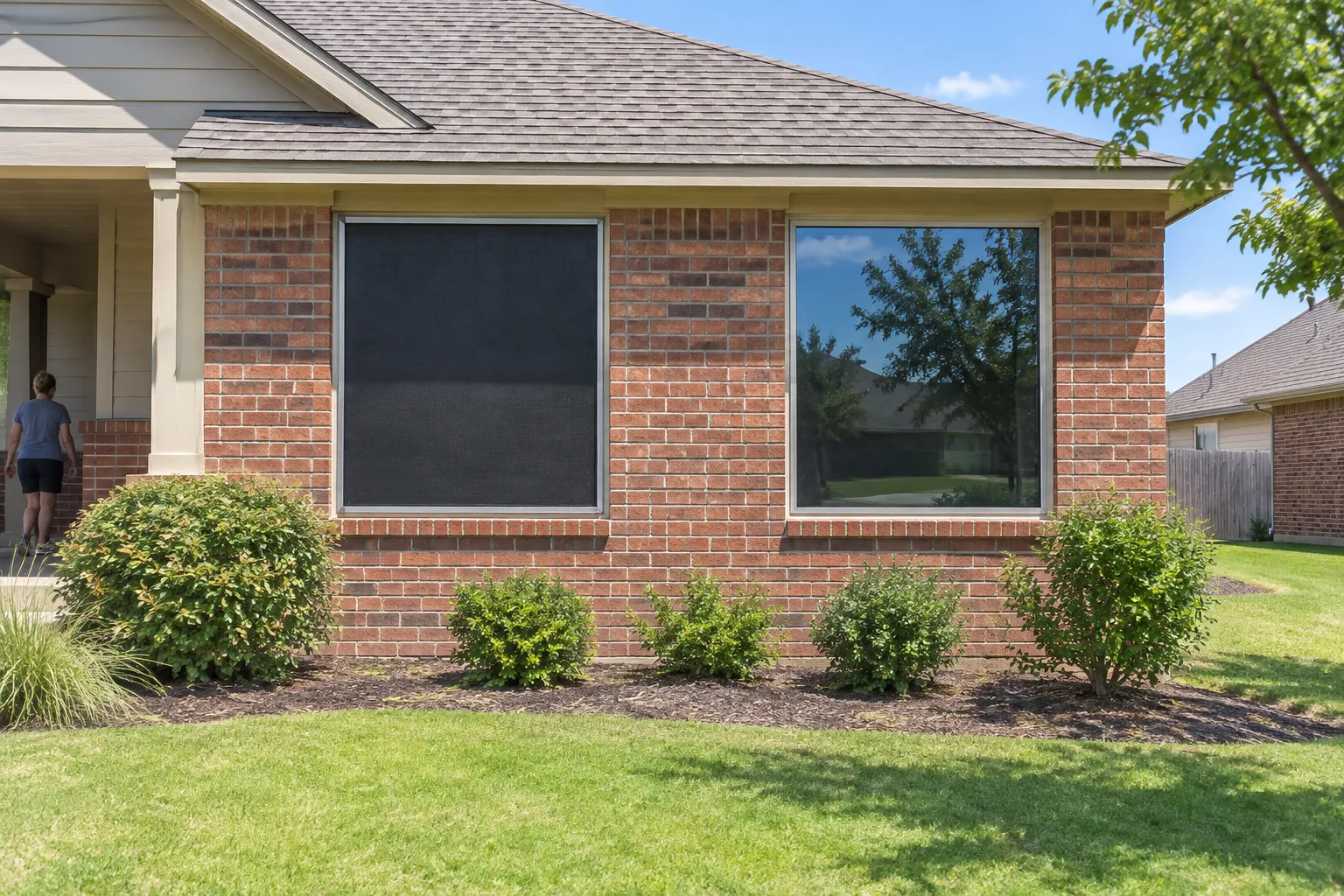
The deciding question is usually the view and the look, not the price. We compare them fully on solar screen vs window film.
How much does it cost to block heat in one hot room?
For a typical west living room with a picture window and a sliding door, about 80 square feet of glass, guide prices put standard solar film at roughly $640 to $1,120, reflective film at about $480 to $640, and ceramic film at about $800 to $1,600. Solar screens on the same openings would be priced per window and door.
| Option for about 80 sq ft of glass | Rough guide total |
|---|---|
| Reflective film | about $480 to $640 |
| Standard solar film | about $640 to $1,120 |
| Ceramic film | about $800 to $1,600 |
Small jobs may meet an installer's minimum charge, often around $250, so it usually pays to treat all the hot glass in one visit.
Which heat-blocking option suits an Oklahoma summer?
For a house you want to look out of, film usually gives the best balance, because it works every hour without anyone closing anything. Oklahoma City sees highs in the 90s through much of summer and around 3,000 hours of sunshine a year, so passive, always-on protection on west and south glass makes the most difference.
A sensible mix for many houses:
- West and south windows you look out of: ceramic or solar film.
- West glass nobody looks out of, such as a garage apartment: reflective film or a solar screen.
- Bedrooms: film plus blackout curtains.
- North windows: usually nothing needed.
The International Window Film Association notes that results depend on film type, installation, orientation and climate, so the same film does more on a west window than a north one.
Is it cheaper to film windows or replace them?
Filming is far cheaper. Replacing windows with new low-e units costs many times more per window than film, so replacement only makes sense when frames are failing, seals have broken or the windows leak air. If the glass and frames are sound and the problem is solar heat, film gives most of the cooling benefit at a fraction of the cost.
If your windows are already low-e, the gain from film is smaller; see window film on low-e glass.
Does blocking window heat lower electric bills?
It can lower cooling costs in rooms with a lot of sun on the glass, but by how much varies a great deal between homes. The biggest savings come where a large share of the cooling load enters through west and south windows. In shaded homes, the comfort gain is usually larger than the bill saving.
We go into how to estimate it for your house on window film energy savings, and the overall film price table is on window tinting cost.
What is the cheapest way to block heat without losing the view?
Standard solar film on the sunny windows only is usually the cheapest way that keeps the view, at about $8 to $14 per square foot installed. Reflective film can cost less and block more heat if you don't mind a mirrored look from outside. Ceramic costs more but keeps the glass looking natural.
When you're ready, tell us which rooms get too hot and we'll arrange a visit and a written quote for film.
Questions people ask
What can I put on my windows to keep the heat out?
The main options are solar control or ceramic window film on the glass, exterior solar screens, and blinds or curtains. Film and screens stop heat before or at the glass and work all day; blinds work after heat comes in and only when closed. Many homes combine film with curtains.
What is the best window treatment to keep heat out?
For heat alone, exterior shading such as solar screens or awnings is very effective, because it stops sun before it hits the glass. For heat with a clear view and no daily effort, heat control film is usually the best treatment. Interior blinds help but let more heat in, since the glass has already warmed.
Do reflective blinds or foil on windows work?
Reflective blinds help a little more than plain blinds when closed. Foil taped to glass blocks heat but blocks light and the view completely, can look poor from outside, and on some glass can raise its temperature unevenly. Film made for windows gives a cleaner, safer result.
Is it cheaper to keep the AC running or to tint windows?
Tinting has an upfront cost, while running the AC harder is an ongoing one. On very sunny glass, film can reduce how hard the AC works in those rooms and make them usable on hot afternoons. Whether it pays back in money depends on how much of your cooling load comes through the windows.
Can I block heat from windows myself?
Yes. Closing curtains in the afternoon, adding reflective or cellular blinds, or fitting DIY solar film to small, easy windows all help. DIY film is much cheaper in materials but harder to get bubble-free on large panes. Our guide to DIY window tinting vs hiring an installer covers when DIY makes sense.
For what the work involves beyond the price, see window tinting oklahoma city.
Sources
- Published window film cost guides (HomeAdvisor, Angi, HomeGuide, Bob Vila), checked November 2026
- Published solar screen cost guides (Angi, HomeGuide, HomeAdvisor), checked November 2026
- International Window Film Association, heat control
- Oklahoma City climate normals, 1991 to 2020 (NOAA data via Wikipedia)
Last changed