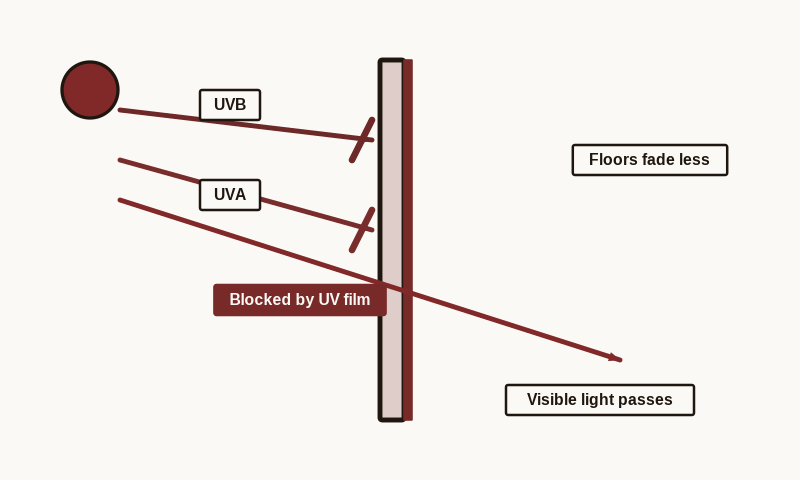
UV blocking window film is a film with UV inhibitors that stops nearly all ultraviolet light passing through the glass, while letting visible light through. The Skin Cancer Foundation says UV window film can block more than 99% of UVA and UVB. That matters because ordinary window glass stops most UVB but lets UVA through, so people and furnishings near sunny windows are still exposed indoors. Many UV films are nearly clear. For the bigger picture of what film does to sunny rooms, see heat control window film.
Does regular window glass block UV?
Only partly. Glass filters most UVB, the rays most linked to sunburn, but lets much of the UVA through, according to the Skin Cancer Foundation. UVA passes through windows year-round, including on cloudy days, and the International Window Film Association notes that UVA penetrates deeper into skin.
So sitting by a sunny window for long periods, at a desk, a reading chair or a kitchen table, still means UV exposure. UV film closes that gap.
How much UV does window film block?
Quality window films block up to 99% of UV rays, according to the IWFA, and the Skin Cancer Foundation says UV window film can block more than 99% of UVA and UVB. To earn the Foundation's Seal of Recommendation, a UV window film must show data that it blocks 99% or more of solar UVA and UVB.
| Glass | UVB | UVA |
|---|---|---|
| Plain window glass | Mostly blocked | Largely passes through |
| Glass with quality UV window film | Blocked | Blocked, 99% or more on qualifying films |
When comparing films, look for a stated UV rejection figure, or the Skin Cancer Foundation Seal on the product.
Does UV film stop furniture and floors fading?
It slows fading considerably but doesn't stop it entirely. UV is a major cause of fading, so blocking up to 99% of it helps a lot. Visible light and heat also play a part, which is why the IWFA notes that no film eliminates fading. A film that also cuts some heat and light protects better than UV-only film.
Rooms where this matters most: living rooms with hardwood floors and rugs in the sun, rooms with artwork or photos near windows, and stores with merchandise in display windows. Our page on home window tinting covers which film suits which room.
Is clear UV film different from tint?
Yes. Clear UV film blocks UV while leaving the glass looking almost untouched, so it changes neither the view nor the light. Tinted or solar films usually block UV too, plus heat and glare. If you only want UV protection and a perfectly clear look, clear UV film is the option; if heat is also a problem, a solar or ceramic film does both.
Clear UV films are popular on historic or high-end homes where the look of the glass matters. Ceramic films are a middle ground: light, and strong on both heat and UV. See ceramic window film.
Is it safe to put UV film on windows?
Yes, when the film suits the glass. UV films are generally among the least demanding films for glass because many are clear and absorb little heat. As with any film, the installer should check the film maker's guidance for double-pane, low-e and specialty glass, so warranties for the window and the film stay valid.
The IWFA explains that film makers publish film-to-glass tables for this reason; our guide to tinting double pane windows covers it.
How long does UV window film keep working?
The Skin Cancer Foundation describes UV window film as effective for up to a decade. Most quality interior films last 10 years or more overall, though UV performance and appearance depend on the product and how much sun it gets. The manufacturer's written warranty tells you what is covered and for how long.
See how long window tinting lasts and window film warranties.
Can I install UV film myself?
Yes, on small, simple windows. Clear UV film is forgiving to look at, but bubbles and dust still show. Large panes, double-pane or low-e glass, and skylights are better left to an installer, who also checks the film suits your glass. See DIY window tinting vs hiring an installer.
For prices, see home window tinting cost.
Questions people ask
What is the best UV blocking film for windows?
The best UV film is one that publishes a UV rejection of 99% or more and suits your glass. If you also want heat and glare control, a ceramic or solar film with high UV rejection does both. Look for the stated figures, or the Skin Cancer Foundation Seal, rather than brand claims alone.
Can UV come through windows on cloudy days?
Yes. The Skin Cancer Foundation notes that UVA passes through windows year-round, including on cloudy days. Clouds reduce UV but don't stop it, so rooms with lots of glass get UV exposure most days of the year, not just in summer.
Does UV window film make rooms darker?
Clear UV film barely changes the light at all. Tinted films that also block UV do darken the room somewhat, depending on their shade. If you want UV protection with no change in brightness, ask specifically for a clear UV film.
How long does UV blocking window film last?
The Skin Cancer Foundation says UV window film is effective for up to a decade. Life depends on the product, sun exposure and care. Clean it gently with a soft cloth and a mild cleaner, never abrasive pads, and check the manufacturer's warranty for what is covered.
What does UV window film cost?
UV and glare films sit at the lower end of installed film prices, which national guides put at roughly $5 to $15 per square foot overall. Ceramic films that combine UV with strong heat rejection cost more. You get a written quote after a visit before any work starts.
This guide is one of many on window tinting oklahoma city.
Sources
Last changed