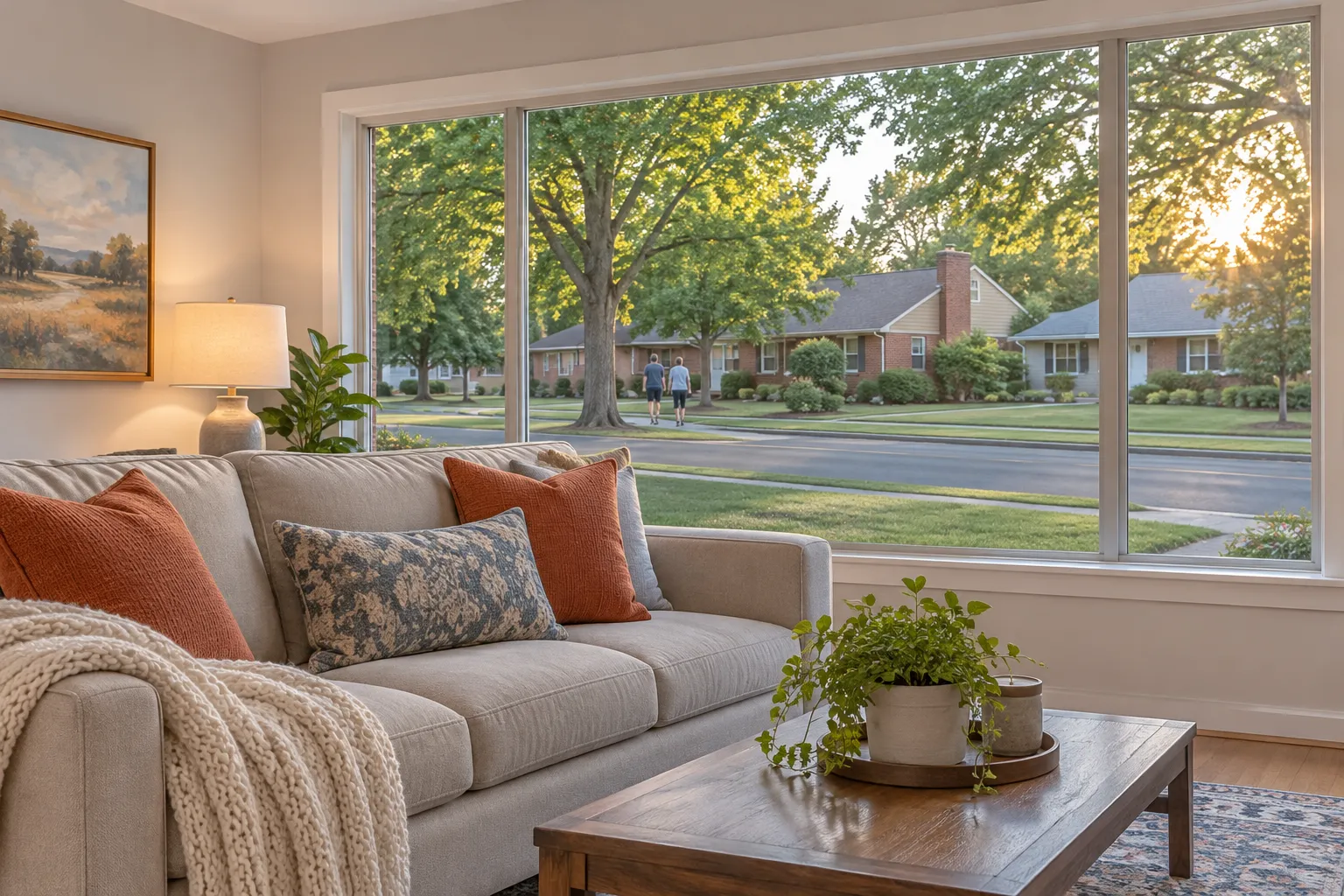
Ceramic window film is a window film made with tiny ceramic particles built into its layers. Those particles absorb and reject much of the sun's infrared heat while letting most visible light through, so a ceramic film can keep a room noticeably cooler without making it dark or mirrored. That combination is why it is the most asked-about premium film for homes and offices in Oklahoma City. It costs more than standard film, so this page covers how it compares and when it is worth it.
What is ceramic window film?
Ceramic window film is a polyester film that uses ceramic nanoparticles, rather than dye or a metal layer, to block heat. The particles target infrared, the part of sunlight you feel as heat, while passing much of the visible light. Film makers market ceramic films as clear-looking, fade-resistant and free of the mirrored look of metal films.
The ceramic particles are far too small to see, so the film looks like a light, even tint. Like other quality films, ceramic films block up to 99% of UV. Because there is no metal layer, film makers also say ceramic films don't interfere with phone, Wi-Fi or GPS signals, a complaint some people have with heavily metallized films.
Our short explainer, what is ceramic window film, goes into the technology.
How does ceramic film compare with dyed, carbon and reflective film?
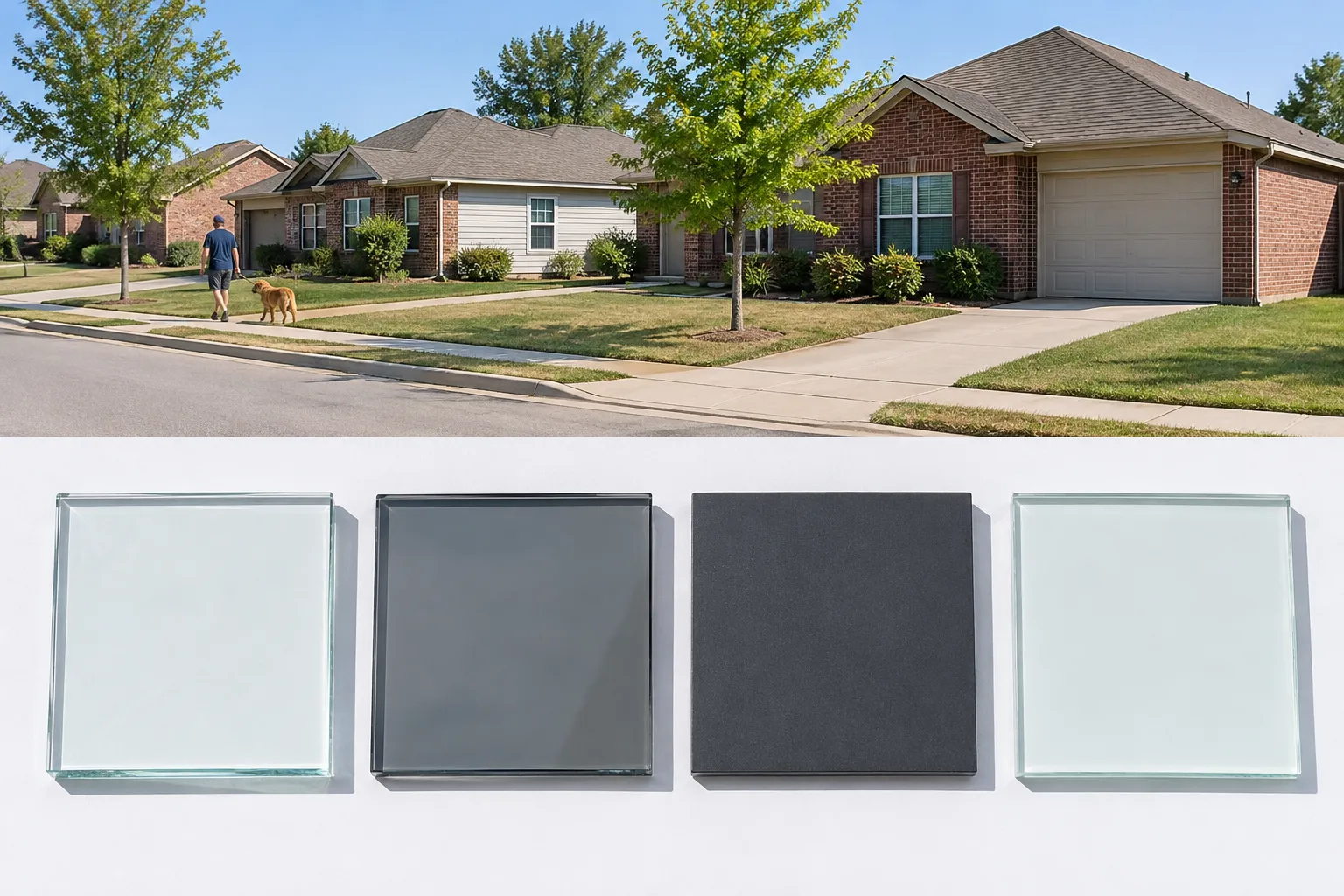
Ceramic film rejects more heat than dyed or carbon film of the same darkness, and keeps a more natural look than reflective film. Dyed film is the cheapest but mostly darkens glass. Carbon film rejects more heat than dyed and doesn't fade. Reflective film often rejects the most total heat but looks mirrored. Ceramic sits at the top for clarity per unit of heat rejected.
| Film | Heat rejection | Clarity and look | Price |
|---|---|---|---|
| Dyed | Lowest for its darkness | Darker glass, can fade over time | Lowest |
| Carbon | Moderate | Matte, no mirror look | Mid |
| Ceramic | High, even in light shades | Natural, close to clear | Higher |
| Reflective (metallized) | Often highest | Mirrored from outside in daylight | Mid |
"Ceramic vs carbon" questions mostly come from car tint, but the same physics applies to house glass. For homes, the real choice is usually between ceramic and reflective film: ceramic if you want the house to look unchanged, reflective if you want maximum heat cut and don't mind the mirror look.
Is ceramic window film worth it for a house?
Ceramic film is worth it where you want strong heat rejection and a natural look, typically living rooms, kitchens and west-facing glass you look out of. It is less worth it on shaded windows, on rooms you rarely use, or where a cheaper standard film would do. Many homes use ceramic on the sunny side only.
Questions to ask yourself before paying more:
- Do you look out of this window a lot? If yes, ceramic's clarity is worth more.
- Does the room overheat? If the glass gets strong afternoon sun, the extra heat rejection pays back in comfort.
- Do you mind a mirrored look from the street? If not, reflective film may reject as much heat for less money.
The general trade-offs of film are on heat control window film.
What are the downsides of ceramic window film?
The main downside is price: ceramic film costs more per square foot than dyed, carbon or most reflective films. It also doesn't give privacy on its own, because it stays light and clear. And like every film, it has to suit the glass, so some double-pane and low-e windows need a specific ceramic product.
There is no meaningful downside in looks for most homes, which is its selling point. If you need privacy as well as heat control, pair it with privacy window film on bathroom or street-facing glass, or with blinds.
Can ceramic film go on double-pane and low-e windows?
Often yes. Ceramic films tend to absorb heat rather than reflect it, so the installer checks the manufacturer's film-to-glass table for your glass type, size and sun exposure before recommending one. That keeps the glass within safe limits and keeps both the window and film warranties valid.
We go into it on tinting double pane windows and window film on low-e glass.
Is 35% or 20% ceramic tint darker?
A 20% film is darker: the number is the share of visible light that gets through, so 20% lets through less light than 35%. With ceramic film, you don't need a dark shade for good heat rejection. Many homeowners choose a light ceramic film, around 40% to 70%, to keep rooms bright while still cutting heat.
Shade numbers come from car tint, where darker usually meant cooler. Ceramic breaks that link, which is the whole point of it. Compare total solar energy rejected and visible light transmission on the spec sheet together.
How much does ceramic window film cost?
Ceramic film sits at the upper end of the roughly $5 to $15 per square foot that national cost guides publish for installed residential film, and some premium ceramic lines cost more. The final price depends on the product, how much glass, and access. You get a written quote after a visit before anything starts.
For a detailed breakdown, see ceramic window film cost. If you are weighing brands, our comparison of 3M, LLumar and Gila film covers the main names. Tell us about your windows and we'll arrange a visit.
Questions people ask
Is ceramic tint actually worth it?
For sunny rooms you look out of, usually yes: it cuts heat without darkening the view, which standard films can't do as well. For shaded windows or rooms you rarely use, a cheaper film often does the job. The value is highest on large west and south windows in Oklahoma's long, hot summers.
Does ceramic window tint reduce heat?
Yes. Ceramic film rejects much of the sun's infrared heat, which is the main reason people choose it. How much depends on the product and your glass, so compare the total solar energy rejected figure for the specific film. A light ceramic film can reject more heat than a darker dyed film.
Does ceramic film interfere with phone or Wi-Fi signals?
Film makers say ceramic films don't, because they contain no metal layer. Interference complaints are usually linked to heavily metallized films. If your home relies on a weak cell signal near the windows, it's a fair question to ask the installer about the specific film.
How long does ceramic window film last?
Quality ceramic film installed indoors typically lasts 10 years or more, and ceramic doesn't fade the way dyed film can. Life depends on the glass, sun exposure and installation. Check the manufacturer's written warranty for the specific product, since terms differ between brands and between homes and businesses.
What is better than ceramic tint?
For heat alone, a high-performance reflective film can reject more total solar energy than many ceramic films, if you accept the mirrored look. For winter as well as summer, some insulating low-e films add heat retention. For the best balance of clarity and heat rejection in a home, ceramic is hard to beat.
Read on
- Costs
What ceramic window film costs per square foot for homes and offices, how it compares with standard film, and when the higher price is…
- What is ceramic film
What ceramic window film is made of, how ceramic particles reject heat while staying clear, how it differs from dyed and metal film, and…
Every service and price guide is on Paneshade window tinting.
Sources
Last changed