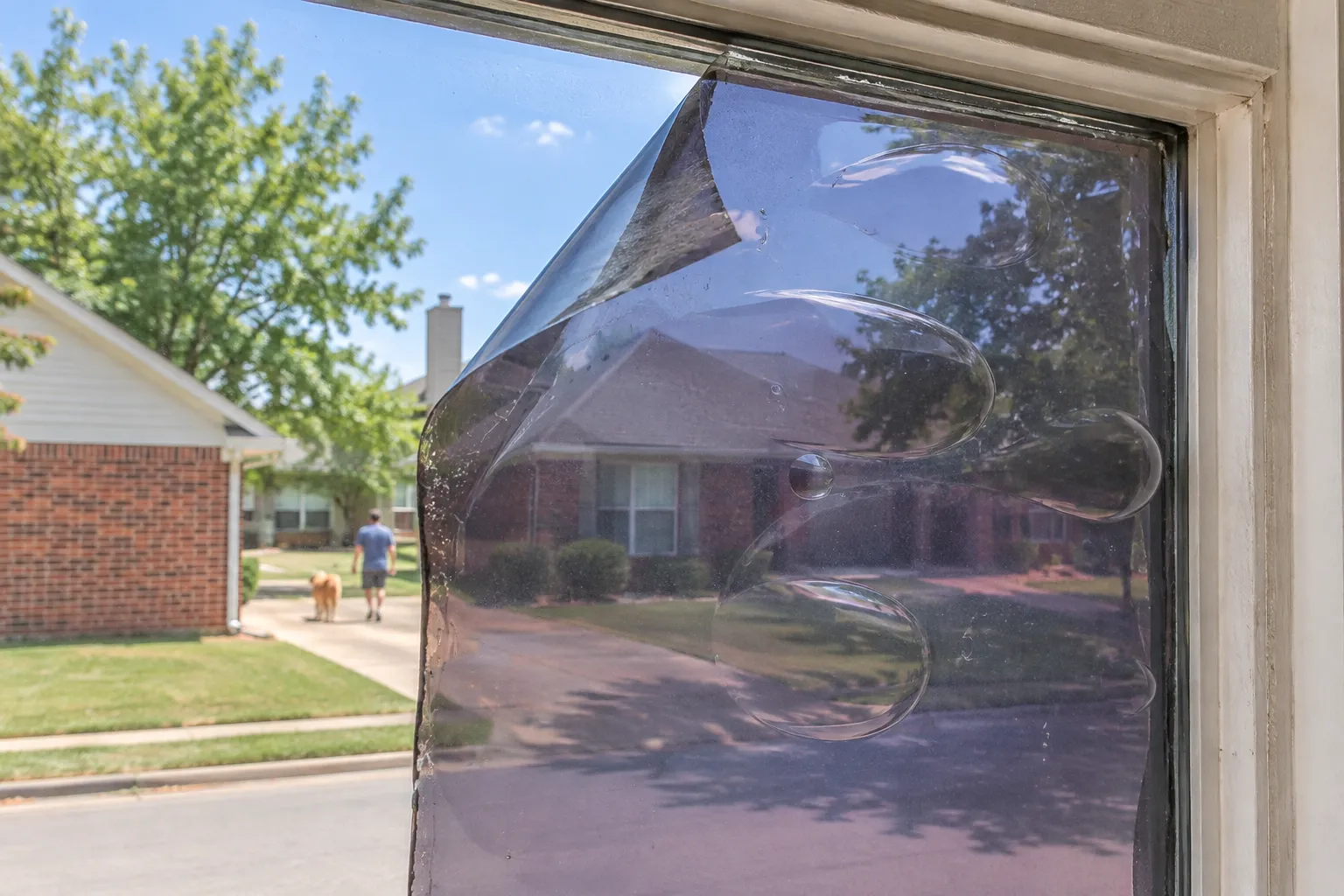
Window film peels or bubbles when the adhesive bond between film and glass fails, usually because of age, a poor installation, harsh cleaning or a film that doesn't suit the glass. Small water pockets in the first weeks after fitting are normal and dry out by themselves; bubbles that appear or spread later are not. This guide explains how to tell the difference, what causes each problem, and when to replace the film. For the bigger picture on window tinting in Oklahoma City, start from the home page.
Are bubbles normal after new window film is installed?
Small water pockets and a slightly hazy look are normal for a few weeks after installation while the water under the film evaporates. Installers usually advise leaving the film alone, often for around a month, and longer in cool or humid weather. If the bubbles shrink over that time, the film is curing normally.
Don't press, pick or puncture curing bubbles; that can trap them or damage the film.
What causes window film to bubble later on?
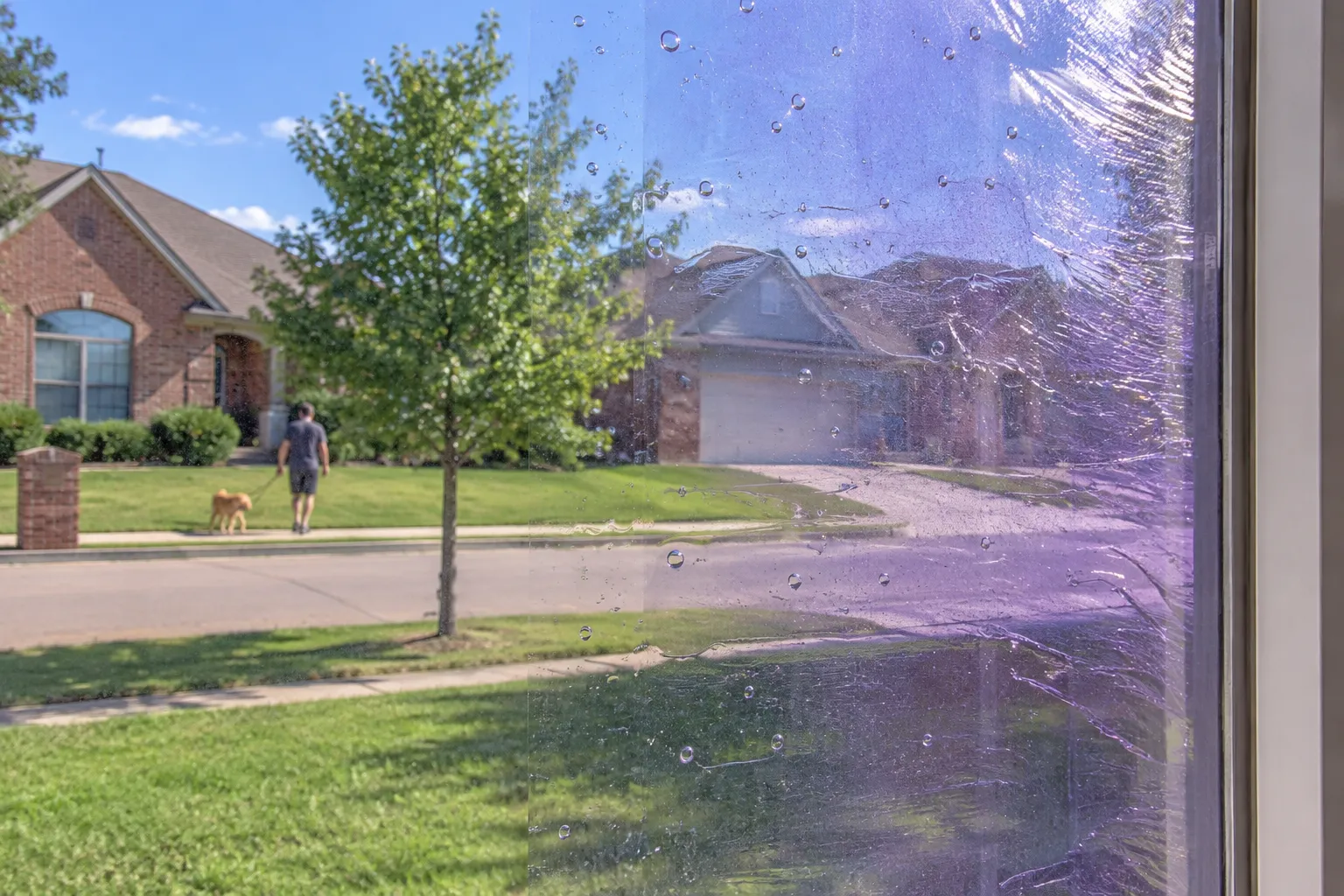
Bubbles that appear months or years after fitting usually mean the adhesive is failing, often from age and sun, a low-quality film, or dirt trapped during installation. Bubbles that are hard, contain air rather than water, or keep spreading won't go away on their own.
| What you see | Likely cause | What to do |
|---|---|---|
| Small soft pockets in the first weeks | Water still curing out | Wait |
| A few hard specks from day one | Dust trapped under film | Ask the installer |
| Bubbles spreading after years | Adhesive failing | Replace the film |
| Bubbles with a purple cast | Old dyed film breaking down | Replace the film |
Why does window film peel at the edges?
Edges peel when the film was trimmed too tight to the frame, when cleaning tools catch the edge, when frames flex or seals move, or when the adhesive weakens with age. Edges also take condensation in humid rooms. Once an edge lifts, dirt gets under it and the peel spreads.
Avoiding it:
- Clean with a soft cloth; never run a blade or scraper along film edges.
- Wipe condensation off bathroom and kitchen windows.
- Fix a small lifted corner early, before dirt gets under it.
Can peeling window film be fixed?
A small, clean lifted corner on newer film can sometimes be re-pressed by an installer. Widespread peeling, spreading bubbles or discolored film can't be repaired in a lasting way: the film needs removing and replacing. If the film is still under warranty, contact the installer first.
Does film peel faster on some windows?
Yes. Film on hot, sunny west and south glass, on glass with heavy condensation, and on windows that are cleaned often tends to age and lift sooner. Film on double-pane or low-e glass that isn't suited to it may also fail early. Exterior film peels sooner than interior film because of the weather.
The glass side is explained on tinting double pane windows, and expected life on how long window tinting lasts.
What should I do about failing film?
Remove it, clean all the adhesive off, and fit new film suited to the glass. Old film with spreading bubbles or a purple cast looks worse over time and protects less. Removal can be done yourself or as part of a refit.
See how to remove window tinting and window film removal.
Questions people ask
Why is my new window tint bubbling?
In the first few weeks, small soft bubbles are usually water that hasn't evaporated yet, and they fade as the film cures, often within about a month. Hard specks from day one are usually dust trapped during fitting. Bubbles that appear or grow later suggest the adhesive is failing.
Will window film bubbles go away on their own?
Water bubbles from installation usually do, as the film cures. Air bubbles, dust specks and bubbles caused by failing adhesive don't. If bubbles grow or appear long after fitting, the film needs attention from the installer, or replacing. Keep your receipt handy in case of a warranty claim.
Can I pop window film bubbles with a pin?
It isn't recommended. Puncturing can leave a visible mark and doesn't fix a failing adhesive. During curing, leave bubbles alone. For bubbles that persist after curing, ask the installer, especially if the film is still under warranty. A puncture may also affect that warranty.
Why is my window tint turning purple?
Purple tint is a sign of older dyed film breaking down in sunlight. The dye that gives the film its color fades unevenly, leaving a purple cast. It doesn't reverse, so the film needs replacing, ideally with a ceramic or metal film that holds its color.
Does cleaning cause window film to peel?
Rough cleaning can. Scouring pads, razor blades and ammonia-heavy or abrasive cleaners can damage film or catch edges. Clean with a soft cloth and a mild cleaner, wipe gently toward the edges rather than across them, and wait the curing time before the first clean.
Sources
Last changed