Office window film solves the complaints facility managers hear most: desks by the glass that are too hot in the afternoon, glare on computer screens, and glass-walled meeting rooms with no privacy. Solar control film on exterior glass moderates hot spots and glare; frosted or decorative film on interior glass gives meeting rooms privacy and makes glass walls visible. The International Window Film Association says film can also reduce cooling costs in buildings with large glass areas. This guide covers office problems and the film for each. For commercial projects in general, see commercial window tinting.
What office problems does window film fix?
Film fixes heat near windows, screen glare, uneven temperatures between sunny and shaded sides, fading of furniture and carpets, lack of privacy in meeting rooms, and the risk of people walking into clear glass walls. The IWFA highlights moderating hot and cold spots and cutting screen glare as key benefits for occupant comfort.
| Complaint | Film | Where |
|---|---|---|
| "My desk is too hot after lunch" | Solar control or ceramic film | West and south exterior glass |
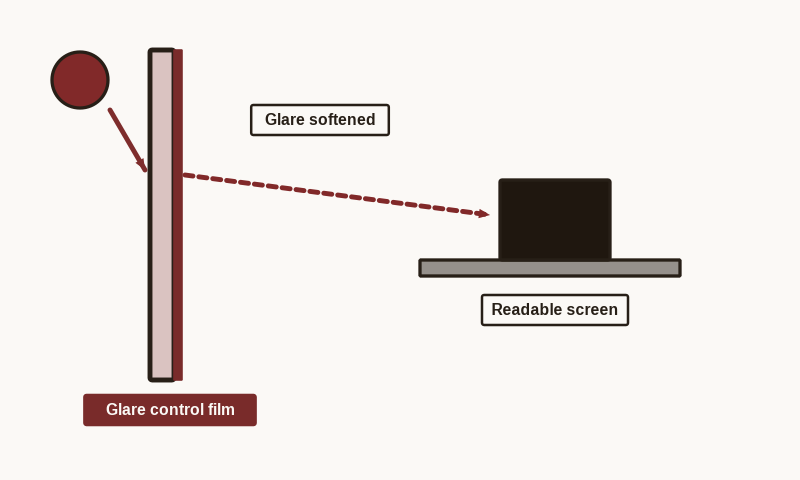
| "I can't see my screen" | Glare control film | Windows facing desks |
| "Everyone can see into the meeting room" | Frosted or decorative film | Interior glass walls |
| "People walk into the glass" | Frosted band or pattern | Glass doors and partitions |
| "The carpet near the windows is fading" | UV-blocking film | Sunny glass |
Which film is best for office glare?
A light to medium solar or glare control film usually works best: it takes the hard edge off direct sun on screens without darkening the room too much. Spectrally selective and ceramic films keep the most daylight while cutting heat. Very dark films reduce glare more but make offices gloomy and increase the need for lights.
The heat side is covered on heat control window film, and ceramic film on ceramic window film.
How do you give a glass meeting room privacy?
Apply frosted or decorative film to the glass walls and door, often as a band from about waist to head height so people can see the room is in use without seeing screens or faces. Full-height frosting gives complete privacy. Switchable smart film lets the room go from clear to private at the touch of a switch.
See decorative window film, PDLC smart film and switchable privacy glass cost.
Can film add branding to office glass?
Yes. Frosted film can be cut with a logo, pattern or wayfinding signs, and colored or printed films add brand colors. Branded film on entrance glass and meeting rooms is a common, removable alternative to etched glass, and it can change when the company rebrands or moves.
How is an office film job planned around work?
Installers usually work room by room or floor by floor, often after hours or at weekends for desks right against the glass. Film goes on with a water-based solution, so work is quiet and clean. The site visit agrees the schedule, access and any landlord approvals. Most offices stay open throughout.
Things to settle at the visit:
- Which elevations and rooms, and in what order.
- Working hours and access to locked areas.
- Landlord or property manager approval for exterior film.
- Whether the film suits the building's glass.
- Warranty terms for commercial use.
Do I need landlord approval to film office windows?
Often, for exterior glass. Many leases and property managers control changes to the building's outside appearance, especially mirrored or colored films, and some specify approved products. Interior glass partitions are usually simpler. Check the lease or ask the property manager before booking.
How much does office window film cost?
Published guides put office window film at roughly $5 to $15 per square foot installed, with large projects often lower because of bulk pricing. Decorative and frosted film for meeting rooms is about $6 to $13, and switchable film much more. You get a written quote after a site visit before work starts.
See commercial window tinting cost.
Questions people ask
Does window film reduce glare on computer screens?
Yes. Solar and glare control films cut the intensity of direct sun on screens, which reduces eye strain and the need to close blinds. A light to medium film usually balances glare reduction with keeping the office bright. Very dark films reduce glare more but make rooms dim.
Can window film make an office cooler?
Yes, near sunny glass. Solar control film reduces the solar heat coming through west and south windows, which moderates hot spots and evens out temperatures across the floor. The IWFA says it can also reduce cooling costs in buildings with large glass areas.
What is the best privacy film for an office?
For meeting rooms and private offices, frosted or etched-look film is the most common choice, often as a band at eye level. For rooms that need to switch between open and private, switchable smart film. For exterior glass facing a street, a light reflective film gives daytime privacy.
Will window film affect our office Wi-Fi or phones?
Heavily metallized films can weaken signals through glass in some buildings. Ceramic and non-metal films, which film makers describe as metal-free, are the usual choice where signal matters. Mention reception concerns at the site visit so the installer can suggest a suitable film.
How long does office window film last?
Quality interior commercial film typically lasts 10 years or more, depending on the film, glass and sun exposure. Decorative films on interior glass, out of direct sun, often last longer. Ask for the manufacturer's commercial warranty terms with the quote.
This guide is one of many on the window tinting guide for Oklahoma City.
Sources
- International Window Film Association, commercial
- International Window Film Association, before you buy
- Published commercial window film cost guides, checked November 2026
Last changed